

A few times a year I open up my book Simple Options Trading For Beginners for free.
Right now is one of those times.
It normally sells for $29.97, and most of the year that's exactly what it costs. Then I run a free window, let a batch of new readers grab it, and close it back up. No fixed schedule. When it's open, it's open. When it's not, it's $29.97 again.
It's open today.
And if options have always felt like a wall of jargon you're not smart enough to climb — this is the book that's wrong about that. Plain English. No Greeks, no textbook charts. Just how options actually work, with examples you can follow from zero.
I don't know exactly when I'll close this window. I never do. But "free" and "$29.97" are the only two states this book lives in, and you're catching the cheaper one.
Grab your copy while the free window's still open.
Good Trading,
Bill Poulos
P.S. The next time you hear about this book, it'll probably have a price tag again. Today it doesn't.
Spotify's "North Star" Outlook Was Music to Investors Ears
Reported by Leo Miller. Originally Published: 6/11/2026.

Key Points
- Music streaming giant Spotify has seen its share price slide over 30% since this time last year.
- However, the company recently updated its long-term guidance as it pursues its "North Star" goals.
- Investors liked what they heard, with Spotify shares soaring as the company targets sustainable growth and strong margin expansion.
- Special Report: The Biggest IPO Ever: Claim Your Stake Today
Shares of the world’s most dominant player in music streaming, Spotify Technology (NYSE: SPOT), have come under significant pressure over the past 52 weeks. Last June, Spotify reached all-time highs, trading well above $750. Since then, the stock has fallen sharply and now trades more than 30% below those peaks.
During that period, growth slowed considerably, raising concerns about Spotify’s valuation, which had climbed to elevated levels in 2025. The company’s latest earnings report did not help, either, with shares tumbling more than 12% afterward.
Before SpaceX goes public, watch this tiny supplier closely (Ad)
When the railroads launched in the 1860s, Andrew Carnegie didn't profit by riding the trains - he got rich owning the steel rails they ran on. The same dynamic may be playing out today around the anticipated $1.75 trillion SpaceX IPO.
Analyst Michael Robinson has identified a tiny, under-the-radar supplier - just 1/60th the size of SpaceX - that he believes sits at the center of Elon Musk's broader AI infrastructure buildout. Once SpaceX goes public this June, Robinson argues Wall Street will inevitably spotlight this overlooked vendor.
Watch Robinson's presentation and see the details before the IPO window closesHowever, Spotify recently held its first Investor Day in four years, where it outlined ambitious goals as it looks to reshape the narrative around the stock and refocus attention on its North Star initiatives. After a difficult stretch, investors are buying back in.
Rewinding Spotify’s Story: Shares Take a Big Hit as Growth Falls
Much of the decline in Spotify shares has stemmed from a combination of two factors: slowing growth and a high valuation multiple. Notably, in 2024, Spotify posted strong full-year currency-neutral growth of 20% year-over-year (YOY), a solid acceleration from 16% YOY growth in 2023.
However, the company’s growth rate began to cool in the middle of 2025. In Q2 2025, Spotify posted currency-neutral growth of 15% YOY, but currency headwinds reduced reported growth to just 10% YOY. That marked a significant drop from the more than 15% reported growth in the prior quarter and was one of Spotify's lowest quarterly growth rates ever.
At the same time, Spotify was trading at an elevated forward price-to-earnings (P/E) ratio above 60x in the middle of 2025. That valuation was difficult to justify given low-double-digit, decelerating growth, despite Spotify’s strong position in the music streaming industry. In the final quarter of 2025, reported revenue increased by less than 7% YOY, while currency-neutral growth came in at 13% YOY. In short, a mix of currency headwinds and underlying deceleration pushed Spotify’s growth lower, and both the forward P/E and stock price followed suit.
Spotify was able to slightly reaccelerate reported growth to 8.2% in Q1 2026 and currency-neutral growth to 14% YOY. The company also posted beats on both the top and bottom lines. However, the stock still fell 12% after the report, driven by weak guidance and concerns over premium subscriber growth.
Against that backdrop, the company’s Investor Day in May was a clear opportunity to win back market support, and it did just that.
Spotify Eyes Mid-Teens Growth, Large Margin Expansion in Path to North Stars
At its Investor Day, Spotify announced several key targets that captured market attention, with shares jumping 20% over the following two days. First, the company guided for mid-teens currency-neutral annual growth through 2030.
Although “mid-teens” is still within the range of Spotify’s recent growth rates, investors viewed the target as a clear positive. It suggests the company does not expect the deceleration that has weighed on shares to continue. In addition, Spotify remains the leader in the increasingly penetrated music streaming industry. As penetration rises, investors naturally expect growth rates to slow because it becomes harder to attract new customers. Spotify’s expectation that growth will at least remain stable over the long term therefore signals resilience despite those penetration concerns.
Spotify also expects significant margin expansion by 2030. The company is targeting gross margins of 35% to 40%, which would represent an increase of roughly 300 to 800 basis points from its 2025 gross margin of 32%. Meanwhile, Spotify projects operating margins will expand by more than 700 basis points, rising from around 13% in 2025 to over 20% by 2030.
All of this ties back to Spotify’s three longer-term “North Stars”: 1 billion subscribers, $100 billion in annual revenue, and gross margins above 40%. Converting non-paying users into subscribers is one of the key levers the company expects to use to reach those goals.
The company says 71% of its subscribers use the free offering before converting to premium. With more than 450 million free users, Spotify could add over 300 million premium subscribers over time if that conversion rate holds. That would more than double its current subscriber count of nearly 300 million to more than 600 million, bringing it much closer to the 1 billion subscriber goal.
Analysts Point to Upside Ahead After Spotify’s Investor Day
Wall Street analysts also reacted positively to Spotify’s Investor Day, with MarketBeat tracking several price target increases. More broadly, analysts continue to show solid support for Spotify’s outlook. The MarketBeat consensus price target near $656 implies about 35% upside in shares, while Spotify has zero Sell ratings, six Holds, and 23 Buys.
Even after the stock’s recent rally, Spotify trades at a forward P/E near 33x, well below its 51x average since the start of 2025.
Overall, Spotify is showing strong confidence in its ability to continue growing steadily and expand margins at a rapid pace in pursuit of its North Stars. Meanwhile, the stock still trades meaningfully below prior levels, leaving Spotify’s outlook skewed to the upside.
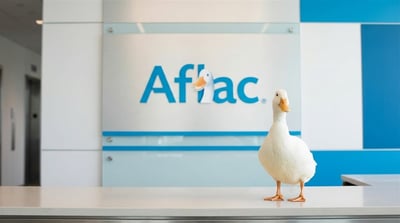
The “Duck Stock” Keeps Quietly Making Money for Shareholders
Reported by Peter Frank. Originally Published: 6/11/2026.
Key Points
- Aflac generates steady cash flow through supplemental insurance and long-standing market positions in the U.S. and Japan.
- Share buybacks and dividend increases continue to support per-share earnings growth and shareholder returns.
- The stock offers stability and income, though analysts see limited near-term upside from current prices.
- Special Report: The Biggest IPO Ever: Claim Your Stake Today
Insurance stocks can be volatile, with earnings affected by floods, wildfires, interest rates, and claims inflation. Then there’s Aflac (NYSE: AFL).
This conservative insurer helps investors sleep at night by generating steady cash, hiking its dividend, buying back stock, and delivering long-term appreciation. In fact, Aflac has raised its dividend for 44 consecutive years, and after a strong first quarter in 2026, the company shows no signs of slowing down.
Before SpaceX goes public, watch this tiny supplier closely (Ad)
When the railroads launched in the 1860s, Andrew Carnegie didn't profit by riding the trains - he got rich owning the steel rails they ran on. The same dynamic may be playing out today around the anticipated $1.75 trillion SpaceX IPO.
Analyst Michael Robinson has identified a tiny, under-the-radar supplier - just 1/60th the size of SpaceX - that he believes sits at the center of Elon Musk's broader AI infrastructure buildout. Once SpaceX goes public this June, Robinson argues Wall Street will inevitably spotlight this overlooked vendor.
Watch Robinson's presentation and see the details before the IPO window closesThe question is whether the stock’s well-earned reputation is already baked into the price, or whether there is still enough upside for new buyers. For retail investors who prefer reliability over excitement, Aflac may be the duck that quacks income.
How Aflac Makes Its Money
Many investors know the Columbus, Georgia-based insurer best from its TV commercials featuring a quacking duck. Fewer understand how the company actually makes money.
The company does sell life insurance and disability insurance, but it is better known as a supplemental insurance provider. That means it sells policies that pay cash directly to policyholders when they experience a covered illness or injury.
The business model is simple. When a cancer diagnosis or accident forces someone out of work, Aflac’s cash benefits help cover everyday expenses such as mortgage payments, groceries, or utility bills—costs that a standard health insurance policy doesn’t touch.
That niche has made Aflac a dominant force in two different markets. In the United States, the company sells its supplemental plans primarily through employers, building long-term relationships with businesses.
In Japan, where Aflac has operated since 1974, the company holds a commanding position in cancer insurance and medical indemnity products. In fact, about half of Aflac’s business comes from Japan, where its brand recognition rivals that of the largest domestic insurers.
Earnings Remain Steady Beneath the Headlines
While Aflac’s first-quarter earnings may appear dramatic at first glance, the underlying picture is much steadier.
On an unadjusted basis, net earnings jumped to $1 billion, or $1.98 per diluted share. That compared with just $29 million, or 5 cents per diluted share, in the same period a year ago, when the company suffered net investment losses of $963 million, or $1.76 per diluted share. By contrast, this year’s first three months delivered investment gains of $49 million, or 10 cents a share.
Adjusted earnings, which exclude investment returns, tell a more modest but still solid story. Adjusted earnings came in at $901 million for the quarter, essentially flat with the $906 million from a year earlier. Adjusted earnings per diluted share rose 5.4% to $1.75, thanks largely to a shrinking share count as the company continued buying back stock.
Japan and the U.S. Continue Driving Growth
Aflac’s two main markets also tell a more nuanced story. In Japan, pretax adjusted earnings rose 5.1% in dollar terms to $759 million, on net earned premiums of $1.57 billion. In Japanese yen terms, net earned premiums were down 4% year over year. At the same time, new annualized premium sales for the quarter climbed 25.5%, driven by recent health-related products designed for younger Japanese consumers.
In the United States, net earned premiums grew 3.5% to $1.56 billion, while pretax adjusted earnings edged up 1.4% to $363 million. Again, these are not flashy numbers, but they reflect the steady growth investors have come to expect.
For all of 2025, Aflac reported adjusted earnings of $4 billion, or $7.49 per diluted share, a modest decline from $4.1 billion in 2024 in absolute terms. But with stock buybacks, it still managed to improve on a per-share basis.
Shareholder Returns Remain a Priority
Buybacks and dividends remain central to Aflac, with no signs of slowing. The company set its quarterly dividend at 61 cents per share in the first quarter after a 5.2% increase. It also said it returned $1.3 billion to shareholders during the quarter alone, including $1 billion in share repurchases and $315 million in dividends.
This kind of consistency has helped keep the stock fairly valued. Shares are up more than 10% over the past 12 months and up about 5% this year. Over five years, the stock has doubled. With a P/E ratio of about 13 and a dividend yield slightly above 2%, the company’s steady performance and payouts are clear.
As a result, Wall Street analysts are largely split on the stock, with an overall recommendation landing at a Hold rating, suggesting the current price may already reflect much of the company’s quality. In fact, with 12 analysts following the stock, the 12-month price target of $112.27 is basically flat from current levels. Six analysts recommend Hold, four suggest Buy, and two recommend Sell.
Aflac Remains a Reliable Income Stock
Aflac is clearly not a stock for investors chasing rapid growth. It is a stock for investors who want to own a piece of a durable, well-managed business that reliably generates cash, increases its dividend, and steadily reduces its share count.
The bottom line is that Aflac remains one of the more dependable income-generating stocks in the insurance arm of the financial sector, competing against rivals such as MetLife (NYSE: MET) and the Colonial Life unit of Unum Group (NYSE: UNM).
There will be some earnings volatility from currency fluctuations and investment results, and the stock will react accordingly. But for investors who want steadiness over surprise, the duck is still worth considering. The main risk isn’t that the company stumbles. It’s that investors pay a full price for a business the market already understands very well.
This email message is a paid advertisement for Profits Run, a third-party advertiser of MarketBeat. Why did I get this message?.
If you have questions or concerns about your account, please email MarketBeat's South Dakota based support team at contact@marketbeat.com.
If you would no longer like to receive promotional emails from MarketBeat advertisers, you can unsubscribe or manage your mailing preferences here.
© 2006-2026 MarketBeat Media, LLC.
345 N Reid Place, Suite 620, Sioux Falls, SD 57103-7078. United States of America..
Post a Comment
0Comments