Hello, Thanks for signing up for MarketBeat Daily Ratings—we’re excited to have you on board. Every weekday, you’ll get a curated summary of new “Buy” and “Sell” ratings from Wall Street’s top-rated analysts, the latest stock news, and bonus investing content—all delivered straight to your inbox. You’re just two quick steps away from completing your sign-up: 1. Make sure our emails go to your inboxGmail users:
Mobile: Tap the three dots (…) in the top right and select Move to Inbox or Move to Primary
Desktop: Click the folder icon at the top and select Move to Inbox or Primary Apple Mail users:
Tap our email address at the top (next to From: on mobile), then select Add to VIP Other providers:
Reply to this message and add newsletters@analystratings.net to your contacts 2. Confirm your subscriptionClick this link to confirm your subscription. This verifies your account and ensures you receive your newsletters without interruption instead of getting stuck in your spam filter. Confirm your subscription here. After you confirm, feel free to download our popular free report, "7 Stocks to Buy and Hold Forever" with this link. Thanks again for subscribing—we look forward to being part of your investing journey. 
Matthew Paulson
Founder and CEO, MarketBeat. P.S. If you didn’t mean to subscribe, no problem—you can unsubscribe here.
Monday's Bonus Content
3 Agriculture Stocks to Buy as Food Inflation Stays Elevated in 2026By Chris Markoch. Article Published: 4/20/2026. 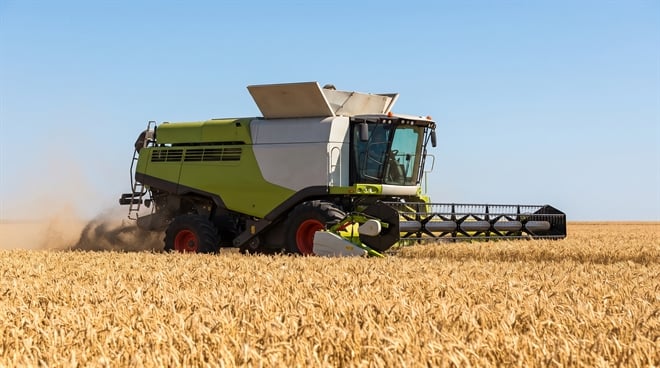
Key Points
- Food inflation is expected to remain above the historical average in 2026, creating tailwinds for agricultural commodity-linked stocks.
- Deere is benefiting from precision agriculture adoption and improving equipment demand at a cyclical turning point.
- Mosaic and Nutrien offer leveraged exposure to rising fertilizer prices, though input cost volatility remains a key risk.
- Special Report: Elon Musk already made me a “wealthy man”
In theory, inflation should self-correct: when the price of goods and services rises, sales fall until supply and demand return to balance. In practice, inflation often becomes sticky because some goods and services—like food and gasoline—are hard for consumers to avoid. To illustrate, the USDA’s Economic Research Service projects overall food prices to rise 3.6% in 2026. That’s above the 20-year historical average and well above the Federal Reserve’s 2% target.
When the SpaceX IPO launches, most investors will already be too late. The real opportunity isn't the IPO itself - it's the infrastructure behind it.
One small-cap company supplies a mission-critical component to Musk's xAI Colossus site that can't be built around. While retail waits for a ticker that doesn't exist yet, early money is moving into this supplier at a fraction of its potential value. See the small-cap stock powering the SpaceX buildout today
It would be easy to blame grocery stores, but they operate on razor-thin margins, so that argument doesn’t hold. The problem is more structural and driven by multiple, often independent, factors. For example, food-price inflation has accelerated because of higher commodity costs. Just when there were signs prices were abating, the conflict in the Middle East pushed up energy prices, adding pressure to input costs. All of this suggests food prices aren’t coming down anytime soon. That’s a challenge for consumers — and an opportunity for investors to consider agriculture stocks positioned to benefit from the disruption. Positioned at the Cycle Bottom, Primed for the TurnDeere & Co. (NYSE: DE) is a good example of why investors favor best-in-class companies. Long before the agricultural downturn, Deere invested in precision technology — including autonomous vehicles and artificial intelligence — anticipating future demand. Despite the sector's headwinds, Deere is starting to benefit. Used large-tractor inventories are down more than 40% from a peak in early 2025, leaving room for new equipment. About 80% of new combine orders now include Deere’s highest-tier automation package, suggesting farmers are committed to precision agriculture. Deere also receives a tailwind from infrastructure demand, including data centers. That helps explain why DE stock is up more than 30% over the past 12 months and over 25% year-to-date in 2026. In the two years prior, the total return in the stock was 18%. Analysts have a consensus price target of $655.45 on DE stock, which still implies some upside as of April 14. That pairs with a dividend yielding about 1.1% and an annual payout of $6.48 per share. A Deep-Value Stock at a Cyclical Inflection PointThe Mosaic Company (NYSE: MOS) is one of the world’s leading producers and marketers of concentrated phosphate and potash crop nutrients. It shouldn’t be surprising that MOS fell roughly 10% in the 30 days ending April 16 as fertilizer prices reacted to disruptions in the Strait of Hormuz. Mosaic is highly sensitive to sulfur costs. Analysts estimate that every $10-per-ton increase in sulfur prices cuts roughly $10 million from Mosaic’s quarterly EBITDA. That margin pressure could offset any benefit from last year’s announcement by China’s National Development and Reform Commission, which implemented a dual-track pricing model that effectively restricted phosphate exports until at least August. Analysts are neutral to bearish, giving MOS a consensus Hold rating and a $30 price target, implying about 20% upside. Still, MOS looks attractively valued at roughly 14x trailing earnings and about 12x forward earnings. Those multiples could compress further if the company delivers stronger 12-month earnings growth than the 7.8% currently forecast. The World's Largest Potash Producer, Firing on All CylindersNutrien (NYSE: NTR) is a solid momentum play. The company generated net earnings of $2.30 billion for the full year 2025, driven by higher net selling prices for fertilizer, record upstream fertilizer sales volumes, and stronger retail earnings. That performance lifted NTR nearly 35% over the past 12 months and about 15% so far in 2026. The company’s scale — potash mines in Saskatchewan, nitrogen facilities across North America, and a sprawling direct-to-farmer retail network — positions the firm for further growth. The fluctuating situation in the Strait of Hormuz has affected natural gas prices in 2026. Natural gas is central to producing ammonia, a key input for the nitrogen fertilizers Nutrien produces. Nutrien is better positioned than many peers to absorb higher gas costs because of its North American production footprint, and it typically benefits on the selling-price side when global nitrogen markets tighten. NTR looks attractively valued at roughly 15x earnings. Analysts carry a consensus Hold rating, but sentiment has turned more bullish recently, with several analysts raising price targets in April. |




Post a Comment
0Comments