
You are a free subscriber to Me and the Money Printer. To upgrade to paid and receive the daily Capital Wave Report - which features our Red-Green market signals, subscribe here. Money Printer 206: One More Time on Momentum (and Why Does It Break?)Great day to go long VIX and SOXS... VIX 25 in the cards?
Dear Fellow Traveler, Let’s talk about the single most documented phenomenon in the history of financial markets… Something that has been observed and validated across stocks, bonds, currencies, and commodities for more than a century, and something that almost nobody outside quantitative finance talks about honestly... Turns out, the honest version isn’t very flattering to the people who sell investment products. It’s called momentum. Momentum? That sounds freaking crazy…
The ConceptMomentum is embarrassingly simple… and linked to liquidity and plumbing… Things that are going up tend to keep going up, and things that are going down tend to keep going down, and this pattern persists across virtually every asset class, in virtually every country, over virtually every time period anyone has ever studied. JPMorgan published a 2015 research report that tested this, going back to 1800 for equities. They tracked two centuries of data, and the pattern held. They tested it across 67 countries, commodities, government bonds, and currencies... and it held there too. Assets that have performed well over the past 3 to 12 months tend to continue to perform well, and assets that have performed poorly tend to continue to perform poorly. This should not work, according to textbook finance. If markets are “efficient,” meaning prices already reflect all available information, then past returns shouldn’t predict future returns at all. But they have, consistently, for more than 200 years… So either the market isn’t efficient, or there’s something else going on. The something else is us. Why Momentum ExistsThe reason momentum works is that human beings are not the rational calculating machines that economics textbooks want us to be. We underreact to new information, we anchor to old prices, and we chase things that are already moving. We’re pretty stupid when you think about it… A company reports earnings that are meaningfully better than expected. The stock jumps 5% on the day. Efficient market theory says that the jump should be the full adjustment. But what actually happens is that the stock drifts upward for weeks or months afterward, as investors who missed the initial move slowly pile in, analysts gradually raise their price targets, and funds that screen for “improving fundamentals” eventually add it to their portfolios. That slow, rolling adjustment is momentum. It’s the gap between when information arrives and when the market fully prices it in. This also works on the downside. A stock starts falling, and people hold on because they’re anchored to the price they paid. They wait for it to “come back.” The selling pressure builds slowly and painfully over months, which is exactly the kind of grinding decline that momentum strategies are designed to capture. The behavioral finance community calls this the “disposition effect.” People sell their winners too early and hold their losers too long. And the aggregate result of millions of people doing this at the same time is momentum. Of course… there’s the temptation to buy stuff in the face of momentum declines too… We try to call bottoms. We tell ourselves that the worst is over for a stock trading at 20x REVENUE… a stock that also isn’t profitable, has a negative Return on Invested Capital and negative margins, and is down 35% since the liquidity high of October and November… faces real disruption threats from AI… and the clear threat of ongoing valuation compression from broader macroeconomic forces like Japan and SaaS. And we don’t buy the stuff that’s cheap, like a Houston-based energy royalty name kicking off 8% a year, runs a profit margins north of 65% and an ROIC of 20%, helps deliver the energy to AI, remains a chokepoint to the economy, and could deliver a total return north of 20% this year because it’s… boring… Sure, the former can run higher… but it’s gonna need a money printer to help out… I’m giving away a free 90-day subscription to the first person who names both companies in the comments… Because… Why nots? Why Momentum BreaksWhat’s the difference between retail and institutions when it comes to momentum? The retail experience of momentum is pretty simple. It sounds like this…
The institutional experience sounds more like this…
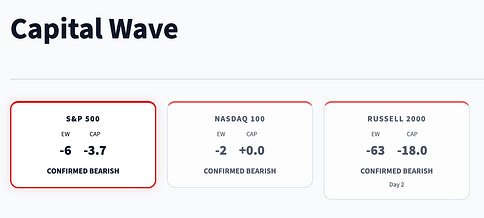
As you can see, one of those has a plan for when momentum breaks. The other one does not. What, that’s not what goes through your head when a stock drops 8% on a Tuesday? Breakdowns are my bread and butter. That’s what we’re looking for when these figures go negative… usually suddenly. And even at all-time highs.
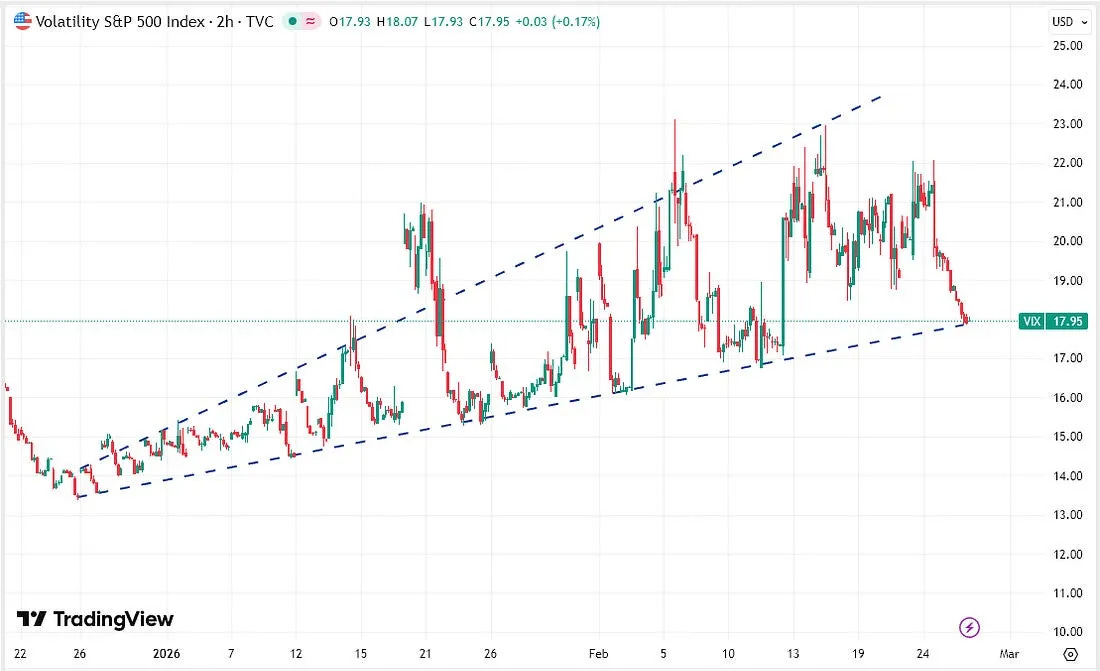
These breakdowns are what I care about more than anything… Why do rallies start to collapse… what are the signals they’re about to reverse? This is going to sound really simple… “Momentum works beautifully until it doesn’t.” Then, when it stops working, it doesn’t gently fade... it detonates. The JPMorgan data shows that momentum crashes are among the most violent events in financial markets. In 2009, a long-short momentum portfolio lost roughly 40% in a matter of weeks. Similar crashes happened in 1932 and 2001, at points where prolonged trends suddenly and violently reversed. The same thing has happened recently too… Think COVID 2020, August 2024, and February/March 2025. On August 1, 2024, our signal went negative… The Nikkei crashed four days later. Our signal went negative on January 28, and gold and silver prices collapsed two days later. One of the worst momentum selloffs happened a week later. Just because it goes red doesn’t mean it’s going to crater… but every time this is negative for an extended period, I’m bearish until we get to a key resistance level, we see insider buying, or we witness policy accommodation (See Nov 21, 2025), The mechanics are straightforward. Everyone riding the same trend is, by definition, holding the same positions. When something forces a reversal... a policy change, a crisis, a sudden shift in sentiment... all of those investors try to unwind at the same time. The winners crash because everyone is selling simultaneously. Because leverage leaves the market. Because panic is just a headline away… or a simple AI-plugin from killing a sector. Meanwhile, losers spike as everyone simultaneously covers their shorts. The Volatility ProblemMomentum strategies perform best in calm, trending markets, where prices grind steadily without many violent swings. They also benefit greatly when a central bank has provided ample support through monetary policy… This isn’t a new discovery… Stanley Druckenmiller discussed this in 1988, after the Fed began accommodating in the wake of the 1987 Crash. And any momentum trader and performance manager of the 1960s (people like Gerald Tsai at Fidelity) should have put this together… but experienced incredible boom and busts through the 60s and 70s. In these positive conditions (especially as accommodation fuels positive formations), the signal is clean, the trends are persistent, and returns accumulate smoothly. When volatility spikes, momentum gets destroyed. And I’m not even talking just a few percentage points. I’m talking punch-in-the-face drawdowns that people don’t see because they’re not paying attention to early signals like the one we publish. It’s not because the strategy is wrong, but because volatile markets are choppy markets, and choppy markets reverse direction constantly, which means the momentum signal keeps flipping and the strategy gets whipsawed. Quant funds know this. They scale their positions inversely to recent volatility... when it’s low, they increase position sizes because the signal is more reliable. When it’s high, they cut exposure because the risk of a momentum crash goes way up. Retail investors do the exact opposite. When volatility spikes, that’s when retail trading volume surges, because big moves are exciting and the dopamine hits harder. When markets are calm, retail goes quiet because “nothing is happening.” It’s the same data and market conditions. But smart money is called smart for a reason. That’s why we built a signal for retail traders to help them navigate momentum moves and educate them on how to protect themselves during negative momentum periods like now. What You Can Do With ThisIf you’re using any kind of momentum-based approach... whether that’s a momentum ETF, a trend-following system, or even just the habit of buying things that have been going up... you need a plan for when the trend reverses. It can be as simple as a trailing stop loss at 10% or 15% below the peak, or a rule that you reduce position sizes when the VIX goes above 25... Pick a number… But you need something, because the people running institutional momentum strategies have something, and if you don’t, you are the one providing their exit liquidity when the trade turns. Watch the VIX. For the last month at Capital Wave Report, we’ve been showing this chart over and over again… VIX bounced to 20 today.
Next, if you’re looking at “smart beta” or “factor-based” ETFs that claim to capture momentum, understand that you’re getting the mass-market version of a strategy that quant funds exploited decades ago. Those things are dumb. Avoid them. That doesn’t mean it’s worthless, but the alpha has been compressed, and some of these products charge fees that eat into what’s left. Compare the expense ratio to that of a plain-vanilla index fund and decide whether the momentum tilt is worth the premium. Oh… and if someone tells you that upward momentum “always works,” ask them what happened in 2009… and 2020… and 2025… and January 28, 2026… If you’re not following our signal, meanwhile, check it out for a month… And watch The Wave Speech to understand important market signals and clues for reversals. Stay positive, Garrett Baldwin About Me and the Money Printer Me and the Money Printer is a daily publication covering the financial markets through three critical equations. We track liquidity (money in the financial system), momentum (where money is moving in the system), and insider buying (where Smart Money at companies is moving their money). Combining these elements with a deep understanding of central banking and how the global system works has allowed us to navigate financial cycles and boost our probability of success as investors and traders. This insight is based on roughly 17 years of intensive academic work at four universities, extensive collaboration with market experts, and the joy of trial and error in research. You can take a free look at our worldview and thesis right here. Disclaimer Nothing in this email should be considered personalized financial advice. While we may answer your general customer questions, we are not licensed under securities laws to guide your investment situation. Do not consider any communication between you and Florida Republic employees as financial advice. The communication in this letter is for information and educational purposes unless otherwise strictly worded as a recommendation. Model portfolios are tracked to showcase a variety of academic, fundamental, and technical tools, and insight is provided to help readers gain knowledge and experience. Readers should not trade if they cannot handle a loss and should not trade more than they can afford to lose. There are large amounts of risk in the equity markets. Consider consulting with a professional before making decisions with your money.
|
Money Printer 206: One More Time on Momentum (and Why Does It Break?)

By -
February 26, 2026
0








Post a Comment
0Comments