
Healthspan: Why Knowing What to Do Is Only Half the BattleHealthspan is tied to education, and there's plenty of information available. But something more is required to live well for longer.
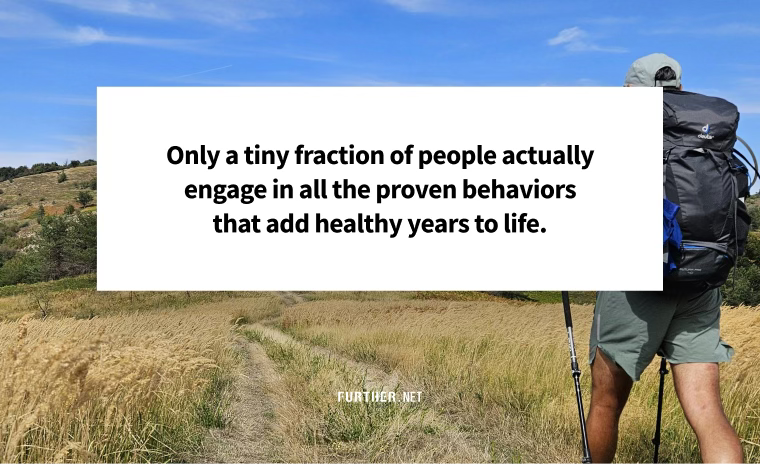
Buenos dias from an unseasonably cool and cloudy Costa Rica! People here for a week’s vacation are disappointed, but when you’re here for three months, it’s a nice change of pace. You know, they say the best investment you can make at midlife is not in your 401(k), it’s in extending your healthspan, or health life expectancy. So this week we’re taking a break from the business-building advice to turn the mic over to Samantha Clark (yes, my better half) to explore your health in an actionable way. Brian The signs are all there. Your knees grind a bit when going down a steep decline. Your back is a little stiff when rolling out of bed in the morning… or the middle of the night. But there are also times you’re shocked to be considered “middle-aged.” I mean, that’s what your parents were for most of your life, not you. Then a downhill walk reminds you. Really, the problem is not getting older (well, not totally). It’s aging like the average American, in which case the math is not on your side. Our average lifespan may sit at an all-time high of 79 years, but the more important statistic is that the typical American spends their “golden years” managing chronic disease. That means significant health decline starts around age 66. For Gen X, that’s closer than we’d like to think. Plus, given that lifespan is an average that is dragged down by those who die much younger, that further means some are spending 20-25 years or more in poor health. And yet, here’s the paradox: Nearly everyone knows what to do. The information is everywhere. We know we should exercise. We know we should eat real food and avoid processed junk. We know sleep matters. But only a tiny fraction of people — around 1.5% according to recent research — actually engage in all the proven behaviors that add healthy years to life. Why do we do this? Laziness? Lack of willpower? A homosapien-specific character flaw? No, it’s what behavioral scientists call the knowledge-action gap, and understanding why it exists is the first step to closing it. The Brain’s Shortcut SystemThe gap between knowing and doing isn’t because we have insufficient information. It’s the result of cognitive biases, the mental shortcuts that helped our ancestors survive in the savanna but now work against us in a world where the biggest threats are slow, cumulative, and invisible. What’s more likely to move you to act:
or:
We respond to concrete information. But future health consequences are inherently abstract. They don’t activate our emotional systems the way immediate threats do. This temporal discounting makes us value immediate enjoyment (that glazed donut) over a theoretical, and distant, (diabetes) diagnosis. The availability heuristic compounds this. If a risk hasn’t touched us directly — through something like a friend’s diagnosis or a parent’s illness — we discount it further. We also have an annoying habit of thinking we’re the exception to the rule, that “it won’t happen to me.” This optimism bias can especially take hold when there’s no damage feedback. And let’s be honest, most of the dangerous stuff is silent: You don’t feel plaque forming in your arteries or a creeping increase in blood sugar. And since we can’t feel it, we keep doing the same things we always did. That preference for things to stay the same is status quo bias. Changing behavior requires effort now for a distant, uncertain payoff, so we stick with current habits even when we know they’re harmful. Until the chest pain hits. Or a scan shows something alarming. Our brains dislike anxiety, so these cognitive biases shield us from constantly worrying about distant threats. That may have served us well in a bygone era, but now, these protective mechanisms make modern health threats far more likely to materialize. Why Your 50s Are the Strategic Healthspan StageMidlife — particularly your 50s — is the optimal stage for interventions to extend healthspan. You’ve lived enough to see where mistaken thinking resulted in problems, but you’re young enough that change still yields massive returns. By 50, you’ve accumulated enough personal data to see patterns. You remember feeling better when you were active. You can trace the pounds that crept on and the energy that’s declined. You now have 30 years of evidence from your own life. This might be the most underrated advantage of middle age. You’ve learned through frustrating experience that there are no shortcuts, anything “quick” is temporary, and real change is boring, gradual, and requires systems, not motivation. You’re FINALLY ready to hear “walk 30 minutes daily for the rest of your life” instead of “lose 20 pounds in six weeks.” You know there are no magic bullets. And then there’s the reality of what’s happening around you. Friends are getting chronic diseases, and parents are declining or gone. Or maybe you’ve had your own warning shot of borderline blood pressure or a prediabetes diagnosis. Abstract statistics are now becoming vivid, specific current events. This is the rare moment when the availability heuristic activates without requiring a full crisis. The beautiful thing is compound returns on investing work here, too. If you’re 50 and make changes now, you have potentially 30-40 years to benefit. But unlike at 25, the window feels finite enough to create urgency. You can no longer say “I’ll start later.” But the flip side of the investment calculus is also true. Every decade you wait, you lose both time and capacity. At 40, you might have 40+ quality years ahead. At 60, maybe 20-25. At 70, the interventions that would have been easy at 50 require heroic effort. 8 Tools to Close the Knowledge-Action GapEveryone knows what to do, but the actual doing requires tools that work with your psychology, not against it. Here are some to help move you to action: 1. Pre-commitment DevicesRemove future choice: Auto-schedule workouts. Keep zero junk food in the house. Use apps that lock you out of social media. This works because you make the decision once, when motivation is high, rather than relying on dwindling stores of willpower later. You are Ulysses, tying yourself to the mast. 2. If-Then Plans“If it’s 7 am on a weekday, then I’m at the gym.” Or, Sundays are for meal-prepping. This strategy is also helpful in bypassing the willpower battle, because the if-then structure removes moment-to-moment decision-making. Research shows that it roughly doubles follow-through rates. 3. Habit StackingLink new behaviors to existing habits using James Clear’s “after X, I do Y” formula. After you start the coffee maker, do a two-minute stretching routine while it brews. After you finish lunch, take a ten-minute walk before returning to work. The established habit becomes the trigger for the new one. 4. Prep Your MindThis is my favorite. Deliberately consume content that reinforces your goals right before you need motivation. Watch videos on the benefits of fasting when you’re about to fast. Listen to podcasts on working out when you don’t want to get out of bed. This works through priming (activating related thoughts), borrowed enthusiasm (adopting the creator’s conviction when yours is low), and cognitive consistency (feeling pressure to act consistently with what you just absorbed). 5. Choice ArchitectureMake it easy to make healthy choices. Put workout clothes and shoes by the bed. Prep healthy meals on Sunday. Join a gym between home and work, not across town. You overcome decision fatigue (and the status quo bias) by pre-deciding and designing your environment to make the right choice the default choice. 6. Immediate Feedback LoopsWearables, apps, tracking. These create the visibility that your body alone doesn’t immediately provide. Macro-tracking lets you know what it takes to hit your daily protein target. Your Oura ring shows you how a bad night’s sleep decimates heart-rate variability. And now, continuous glucose monitors are available without a prescription, so you can see exactly how your morning oatmeal jacks your blood sugar. What was invisible (and therefore, ignorable) can now be seen and tracked. 7. Social AccountabilityThis doesn’t just apply to extroverts. Enlisting workout partners or leveraging public commitments and group challenges keeps us accountable because we’re tribal creatures. And most of us don’t want to let others down, even when we’d let ourselves down. 8. Reframe the TimelineFocus on the immediate benefits of your desired activity. Instead of “exercise prevents heart disease in 30 years,” focus on “I’ll sleep better tonight if I move today.” We know we overvalue immediate rewards, so make the distant and abstract current and concrete. The Clock is RunningYes, our brains are wired for the Stone Age, not the digital age. But understanding the cognitive biases at play and having practical workarounds close the knowledge-action gap. Now you can leverage that wiring instead of fighting it. If you’re in your 50s, you’re in the stage of life that’s the sweet spot. You’ve learned that labs don’t lie and quick fixes fail, so you’re willing to put in the time and work that will make a difference. And you’ve got some runway left, decades, in fact, for those changes to matter exponentially to your future self. But only if your present self acts now. Keep going- Samantha and Brian P.S. Ready to transform your expertise into location-independent income and upgrade your life at midlife? Further Premium gives you the complete roadmap, with business building instruction, financial planning advice, expat guidance, and more. further: flashback🎶 Queens Of The Stone Age – No One Knows, Songs for the Deaf, 2002 🎶 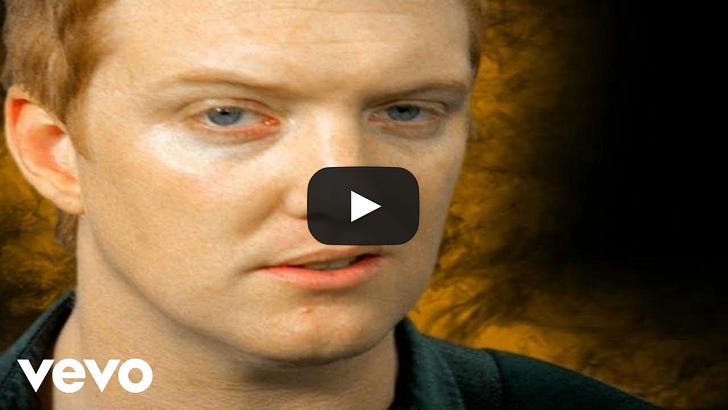 Dave Grohl’s chart-topping trifecta: In late 2002, Nirvana’s final recorded single You Know You’re Right topped the Modern Rock chart. It was eventually replaced at number one by All My Life by Foo Fighters. After a one week break, No One Knows hit number one, with Mr. Grohl beating the hell out of the drums with QOTSA. (YouTube) further: sharingEnjoy this issue? Please forward this email to friends or share by clicking below: Or you can earn access to Further Premium by recommending Further in general. Grab your unique referral code here. Thank you for sharing Further!
You’re currently a free subscriber to Further. To get started building your “live anywhere, earn everywhere” business plus a lot more, join us in Further Premium.
|
Healthspan: Why Knowing What to Do Is Only Half the Battle

By -
February 03, 2026
0





Post a Comment
0Comments